Is Treadmill Running Actually Easier Than Running Outside? Here's What's Really Different
Quick Answer: Treadmill running removes air resistance and provides a moving belt that assists your stride slightly, making it measurably easier at the same pace than outdoor running — the common fix is running at a 1% incline to compensate. Beyond that, the two are close enough that treadmill training does translate to outdoor performance.
You run the exact same pace on a treadmill that feels brutal outside, and it feels noticeably easier. That’s not in your head — there are real physical differences, and most of them have a simple fix.
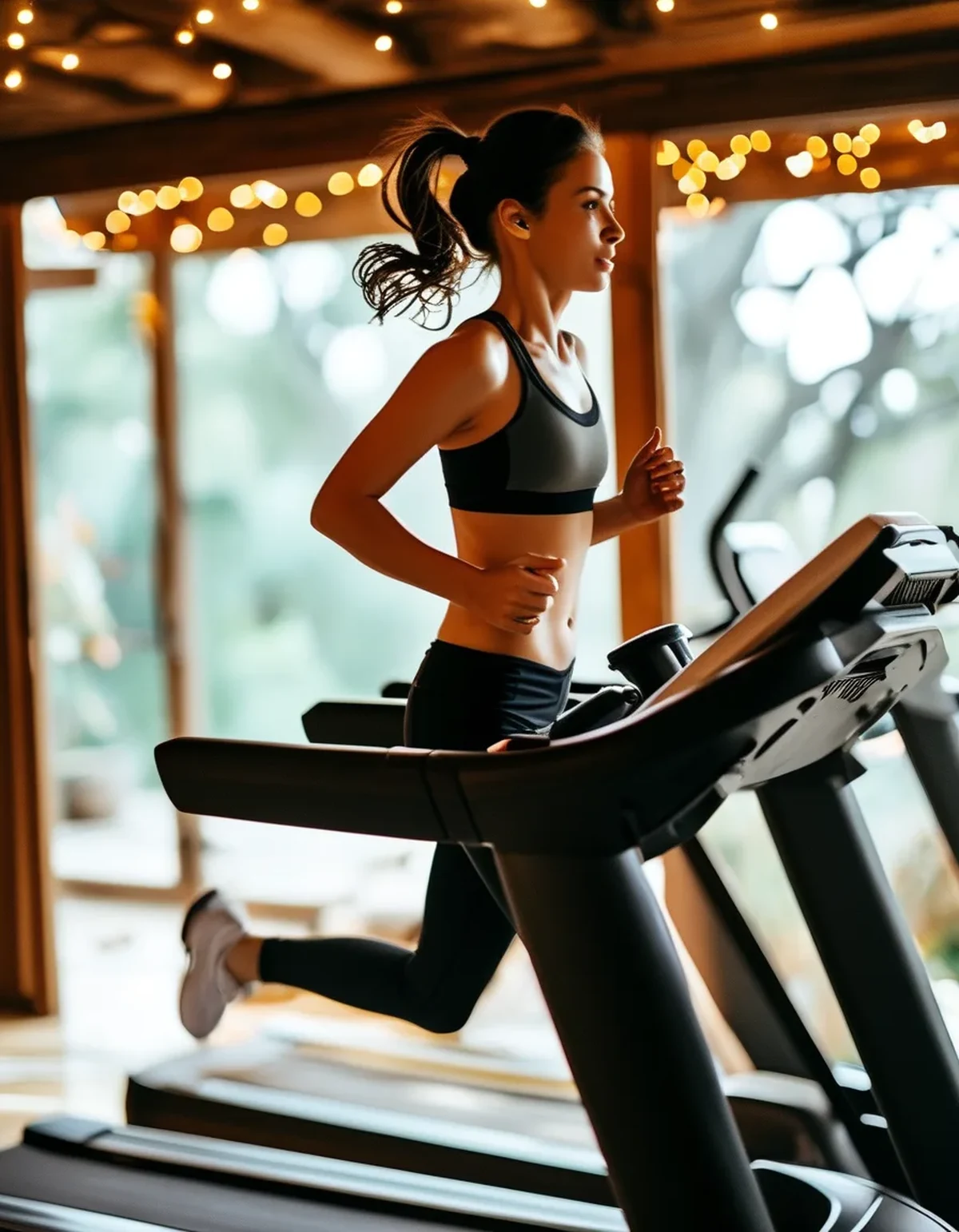
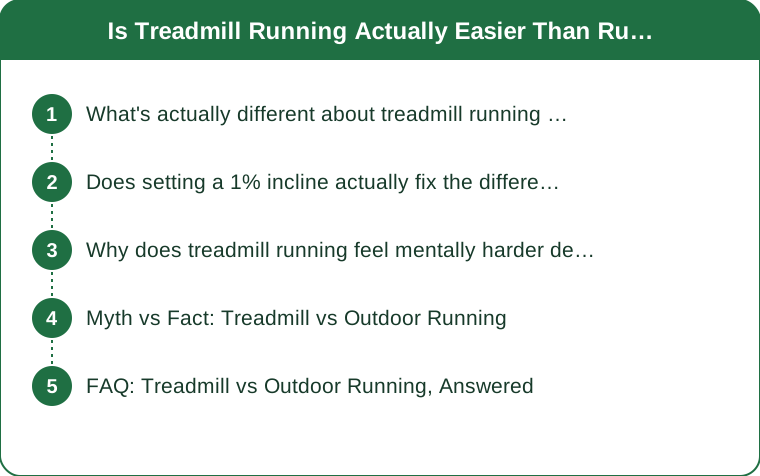
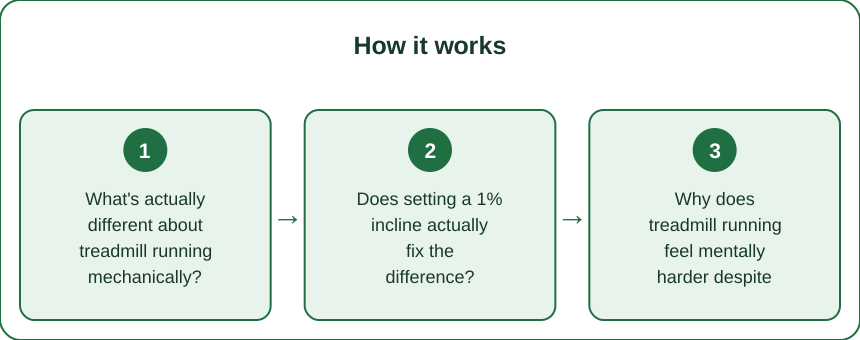
What’s actually different about treadmill running mechanically?
Two real factors separate treadmill and outdoor running: the absence of air resistance, and the belt physically moving your foot backward beneath you, which reduces the propulsive work your legs do compared to pushing off stationary ground. Combined, these make a given treadmill pace measurably less demanding than the same pace outside.
Studies commonly cited by exercise physiologists put this difference at roughly the equivalent of a 1% grade — small, but enough to explain why your treadmill pace and outdoor pace don’t match effort-for-effort.
Does setting a 1% incline actually fix the difference?
For most runners, yes — a 1% incline on the treadmill is the standard compensation that brings perceived effort roughly in line with flat outdoor running, according to widely cited research from the 1990s that’s still the reference point used today. Below race pace, some runners find even a flat treadmill feels comparable; at faster paces, the incline gap becomes more noticeable.
If you’re training for a specific outdoor pace goal, running your treadmill sessions at 1% incline keeps your effort and pacing habits more honest.
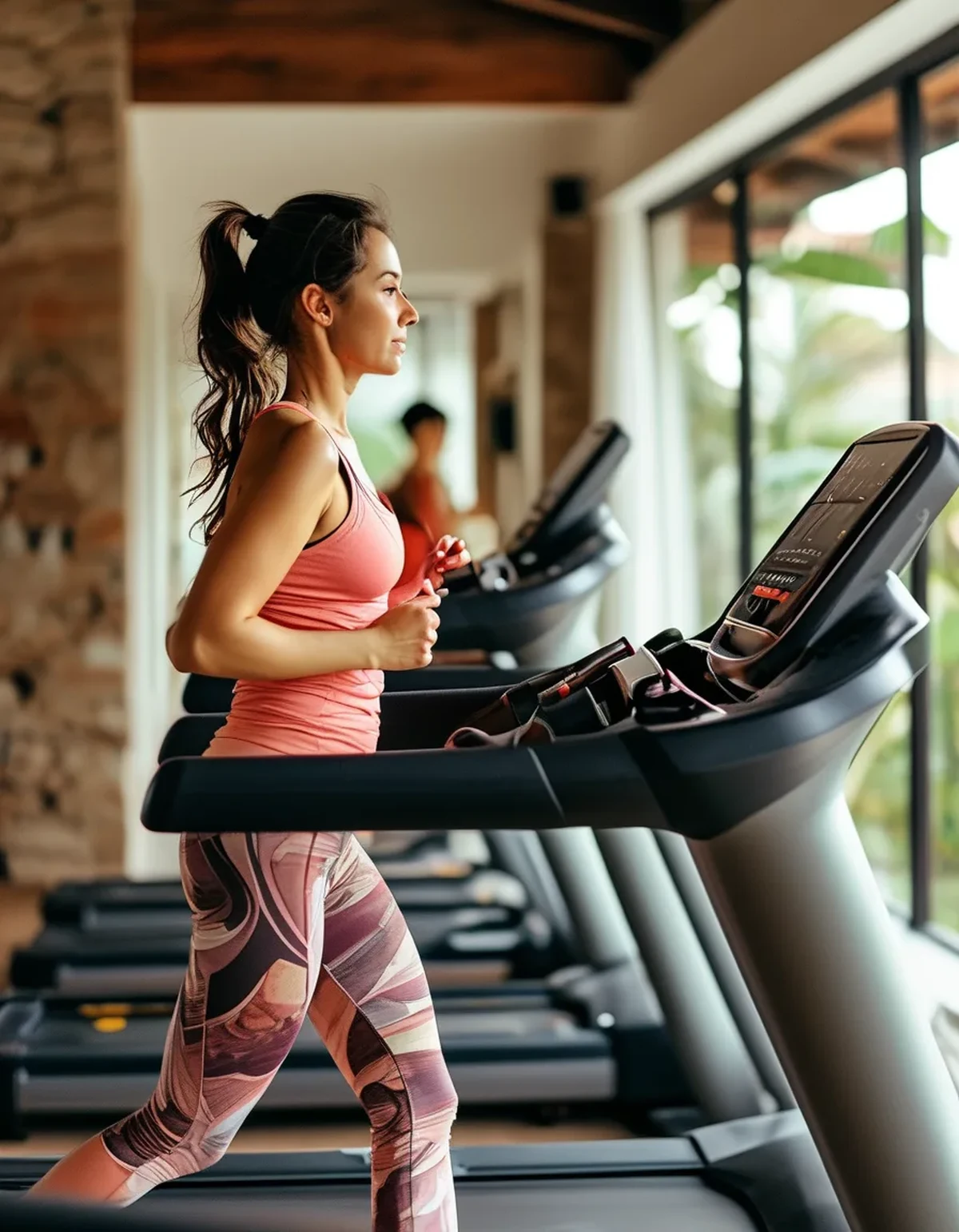
Why does treadmill running feel mentally harder despite being physically easier?
A fixed, unchanging view and a belt that never lets you slow down naturally removes the pacing autonomy and scenery variation that make outdoor running feel psychologically lighter, even when it’s physically more work. This mental fatigue is real and is a separate factor from the physical effort difference.
Breaking a treadmill run into intervals with pace or incline changes every few minutes is the most common fix runners use to combat this specific kind of boredom fatigue.
Myth vs Fact: Treadmill vs Outdoor Running
Myth: Treadmill running doesn’t build real outdoor fitness. Fact: The cardiovascular and muscular adaptations transfer well; the main gaps are outdoor-specific skills like uneven terrain balance and wind resistance.
Myth: A faster treadmill pace always means you’re getting fitter faster. Fact: Without the 1% incline adjustment, a faster treadmill pace can just reflect the belt assistance, not actual fitness gains.
FAQ: Treadmill vs Outdoor Running, Answered
Should I always run at 1% incline on the treadmill?
For pace-specific training tied to an outdoor goal, yes; for easy recovery runs where effort matters more than exact pace, flat is fine.
Does treadmill running burn fewer calories than outdoor running at the same pace?
Slightly, due to the reduced air resistance and propulsive work, though the difference is small enough that it rarely matters for general fitness goals.
Is treadmill running harder on your joints than outdoor running?
Generally the opposite — treadmill belts have more cushioning give than pavement, though trail running’s varied terrain can be gentler than both in different ways.
TL;DR:
- Treadmills remove air resistance and the belt slightly assists your stride
- A 1% incline is the standard fix to match outdoor effort at the same pace
- Mental fatigue on treadmills is real and separate from physical effort differences
- Treadmill fitness transfers well outdoors; only terrain-specific skills don’t
If your treadmill pace and outdoor pace never seem to match, the incline dial is the first thing to check before you second-guess your fitness.
Keep Reading
This article is for general informational and styling purposes only. Fit, sizing, and product availability may vary.