Running Inside During a Heatwave: Set Up the Room Before You Set the Pace
Quick Answer: A treadmill in a warm room is often hotter work than running outside, because you generate the same heat with zero moving air — outdoors, your own speed creates a constant cooling breeze that a treadmill never provides. In late summer, the fix is mostly setup: a strong fan at face-to-torso height in front of you, a real airflow path through the room, running at the cool end of the day, and pacing by heart rate or effort instead of the pace you held in May.
The machine is fine. The air around it is standing still.
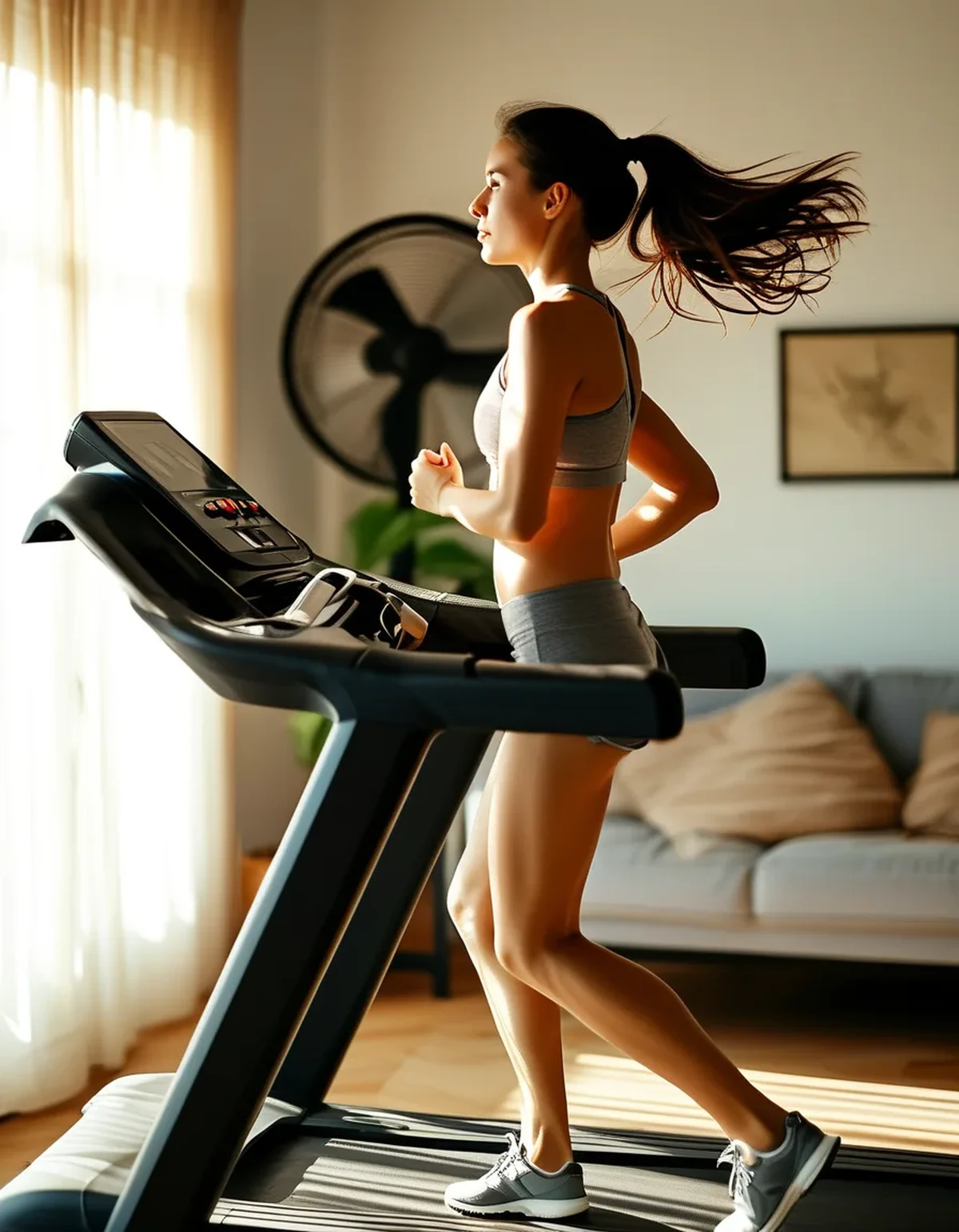
Why does treadmill running feel harder than outdoor running in summer?
Because you lost your built-in breeze and kept all the heat.
Running outdoors at any speed creates airflow over your skin equal to that speed. That moving air is doing serious work: it strips away the warm, humid layer next to your body and lets sweat evaporate, which is your main cooling system. On a treadmill, you run in place and that breeze simply does not exist.
The room heats up around you. A human running hard puts out heat like a space heater. In a small home gym, garage, or spare bedroom with the door closed, room temperature climbs meaningfully over a 40-minute run — and the treadmill motor adds a little of its own.
Humidity rises too, from you. Your sweat evaporates into the room air, and as local humidity climbs, evaporation slows down. You sweat more and cool less, which is the exact spiral you can feel by minute twenty.
Your heart rate drifts upward at a steady pace. As your body shunts blood to the skin for cooling and you lose fluid, heart rate climbs even though the belt speed has not changed. This is normal physiology, not lost fitness.
The result is a genuinely honest complaint: the same pace that felt easy outdoors in spring feels like a threshold run indoors in August. The workout did not get harder. The cooling got worse.
How do you set up the room so the run stays cool?
Move air across your body first. Everything else is secondary.
Put the strongest fan you own directly in front of the treadmill, blowing at your face and torso from a few feet away. This single change replaces most of the missing outdoor breeze and lowers perceived effort more than any gadget. A cheap high-velocity floor fan outperforms an expensive quiet one for this job.
Fan position matters more than fan price. In front and slightly below face height beats behind you or off to the side, because you want air hitting the skin that is doing the sweating — face, chest, arms. A second small fan angled across from the side creates crossflow and helps clear humid air.
Give the humid air somewhere to go. A closed door turns a small room into a sauna. Open the door, and a window if you have one, so the fan is moving fresh air through rather than stirring the same warm soup.
Pre-cool the room, not just yourself. Run the AC or fans for 15 minutes before you start. Starting at 72 degrees instead of 80 changes the entire back half of the run.
Time the session like an outdoor runner would. Early morning is the coolest the room will be all day, before the sun loads the house. A west-facing room at 6pm in August is the worst venue in the building.
Dress for the actual conditions. Lightweight sweat-wicking shorts or breathable yoga pants and a fitted wicking top beat a cotton tee, which soaks, clings, and blocks evaporation. A towel on the console and a mat under the machine handle what the fan cannot.
Hydrate like it is an outdoor summer run, because it is. A bottle within reach, sips every ten minutes, and something with sodium on runs past 45 minutes.
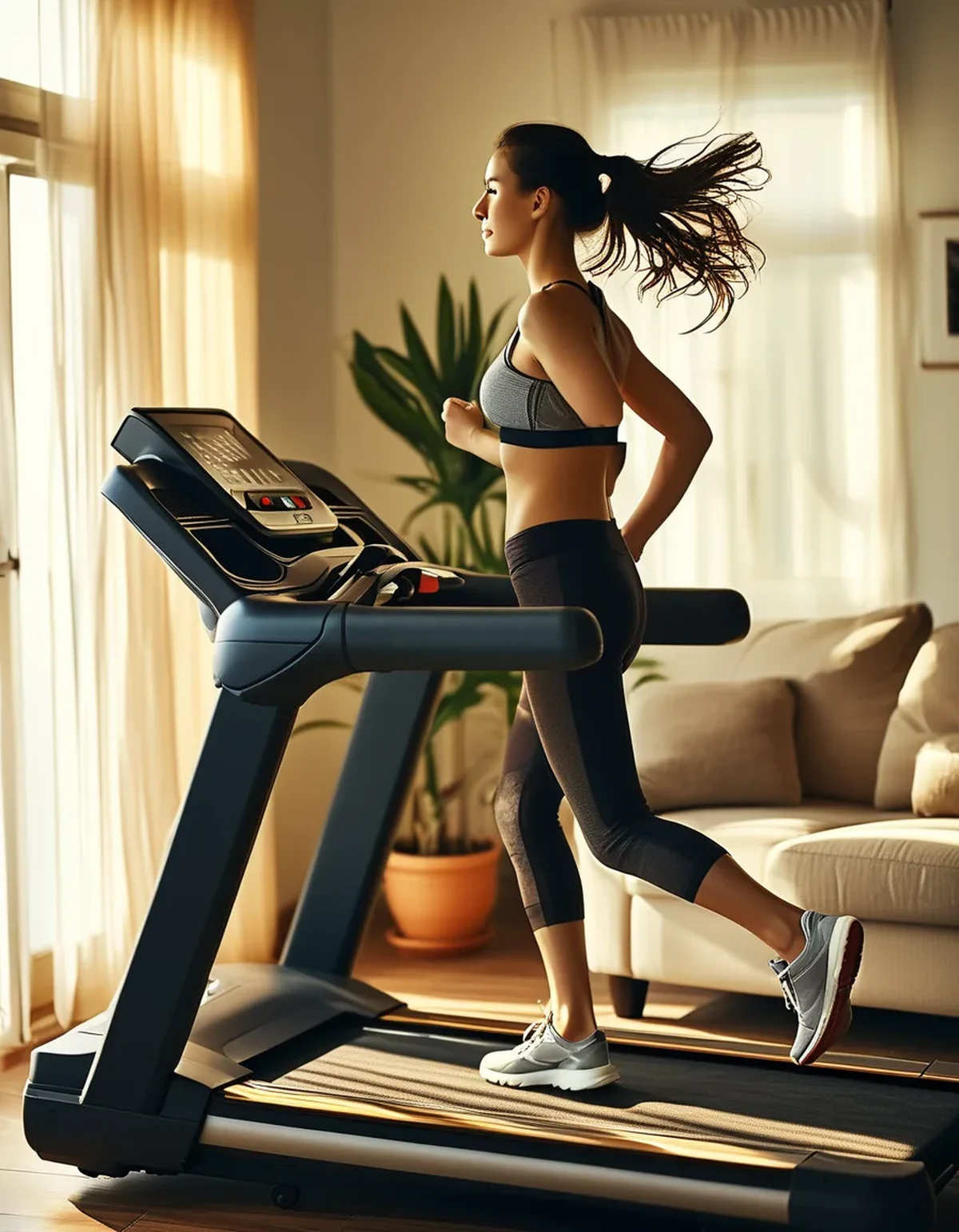
How should you adjust the workout itself in the heat?
Pace by your body, not by the number from spring.
Switch from pace goals to heart rate or effort for the hot weeks. If your easy runs live at a certain heart rate, hold that and let the belt speed fall where it falls. Slowing 20 to 40 seconds per mile at the same effort is normal in a warm room and it preserves exactly the training you intended.
Shorten the intervals before you shorten the run. Quality sessions suffer first in heat. Cutting interval length, adding recovery, or moving the hard session to the coolest hour keeps the stimulus without the blow-up.
Expect the first ten minutes to lie to you. You feel fine before heat storage catches up. The honest reading arrives around minute fifteen, so hold something back until then.
Use drift as a dashboard. If your heart rate at a fixed easy pace climbs steadily through the run, that gap is telling you about heat and hydration. A big drift day is a day to finish easy, not push.
Know that there is a quiet upside. Training in warm conditions produces real adaptations — more blood plasma, earlier sweating, lower salt losses — that make you feel faster when temperatures drop. August treadmill discomfort is banked fitness for October, as long as you respect it rather than fight it.
And know when to bail. Dizziness, chills, goosebumps in the heat, or nausea are stop signals, not toughness tests. Step off, cool down, drink, and take the day. One abandoned run costs nothing; heat illness costs weeks.
This is general guidance, not medical advice. If you have a heart condition or take medication that affects heat tolerance, get personal advice about training in warm conditions.
5 Mistakes That Cook You on an Indoor Run
1. Running with no fan at all. This is the whole problem in one item. Without airflow, sweat drips instead of evaporating, and dripping sweat removes almost no heat. The fan is not a comfort accessory; it is the cooling system.
2. Pointing the fan at your back. Air across your face and chest is where the perceived-effort relief lives. Behind you, half the benefit disappears into the room.
3. Closing the door for privacy or noise. A sealed small room accumulates your heat and humidity by the minute. If the door must stay shut, the session should get shorter.
4. Chasing spring pace numbers. Holding May’s pace in an August room just converts an easy day into a hard one and stacks fatigue you did not plan. Effort is the target; pace is the output.
5. Wearing the big cotton tee. It absorbs sweat, gets heavy, clings, and stops evaporation. A fitted wicking top and buttery-soft leggings or light shorts are cooler within the first mile, not just more comfortable.
FAQ: Hot-Weather Treadmill Questions, Answered
Is running in a warm room useful heat training?
Modestly, yes — warm-condition training drives real adaptations like expanded blood plasma and earlier sweating. But it only works if you reduce pace and respect stop signals; heat training is a controlled dose, not suffering for its own sake.
What room temperature is too hot for a treadmill run?
There is no single cutoff, but most people manage easy runs fine into the high 70s Fahrenheit with a strong fan, and quality sessions get unreliable above that. If heart rate is drifting hard and you feel hot at an easy effort, the room is too warm for that workout.
Why is my heart rate so much higher indoors at the same pace?
Missing airflow. Without the self-generated breeze of outdoor running, your body sends more blood to the skin to dump heat, and heart rate rises at the same belt speed. A fan in front of you removes most of the gap.
Where exactly should the fan point?
At your face and torso from the front, a few feet away, roughly level with your chest. That targets the skin doing most of the sweating and gives the biggest drop in perceived effort per dollar of fan.
TL;DR:
- Treadmill running removes the self-made breeze that cools outdoor runs, so the same pace is genuinely hotter work indoors.
- A strong fan at your face and torso, an open airflow path, and a pre-cooled room replace most of what is missing.
- Pace by heart rate or effort in the hot weeks; slowing 20 to 40 seconds per mile at the same effort is correct, not weak.
- Warm-room training banks real adaptations for fall — but dizziness, chills, or nausea mean stop, every time.
Drag the biggest fan in the house in front of the treadmill tonight. Tomorrow’s run will feel like a different sport.
See It in Motion
Seen here: High Waist Yoga Leggings with Inner Pocket — shop it on bubblelime.com
Keep Reading
This article is for general informational and styling purposes only. Fit, sizing, and product availability may vary.