Moving Your Runs Back Indoors: The Treadmill Questions Everyone Asks in Early Fall
Quick Answer: Your treadmill pace and your outdoor pace stop matching in the fall because heat, humidity, and wind all changed at once - not because you lost fitness. Compare effort and heart rate across the two, not pace, for the first two to three weeks of the swap, and set the treadmill to 1% incline if you want the closest match to flat road.
August ran you indoors. September is about to run you back out, and somewhere in that swap your numbers will stop making sense.
The treadmill will feel harder than it did in July, or the road will feel easier than it should, and you will spend a week wondering which one is lying.
Neither is. Here are the questions that come up every year in this exact window.
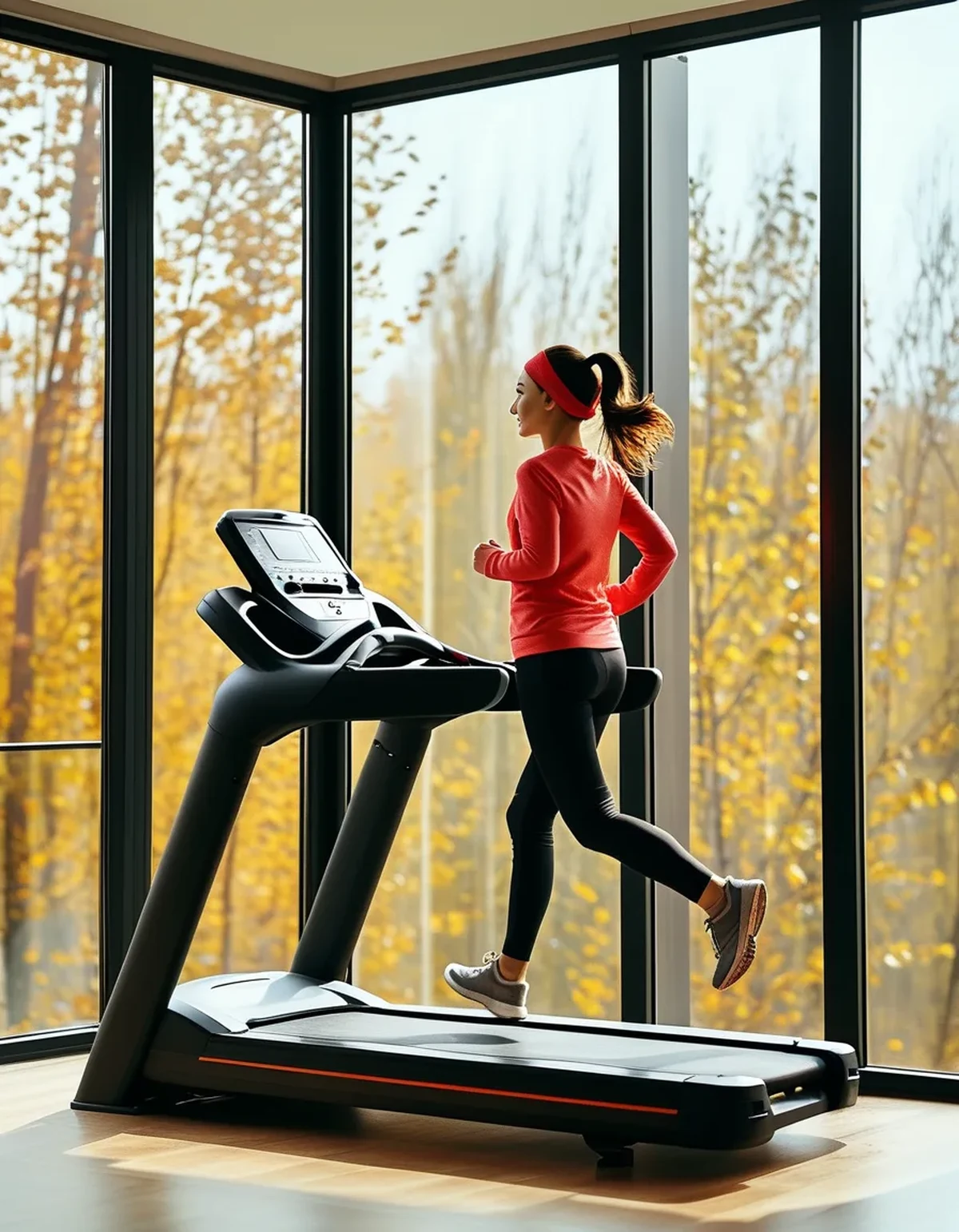
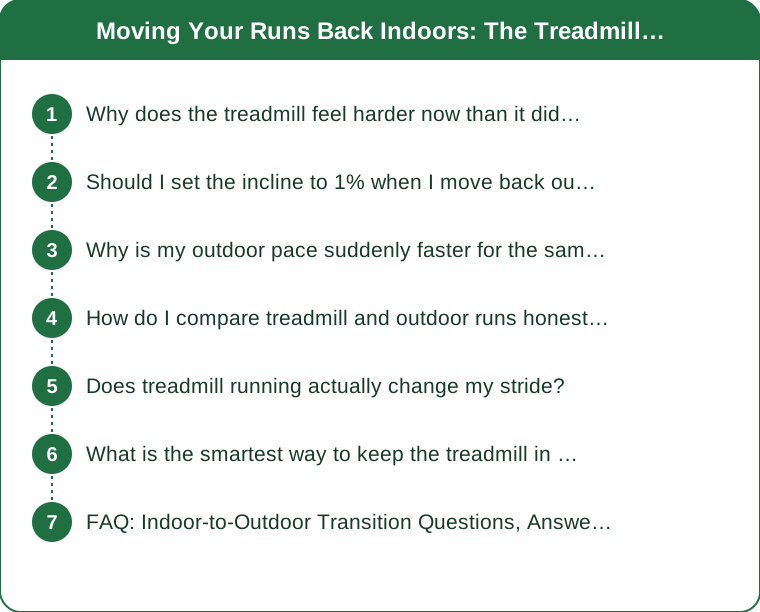
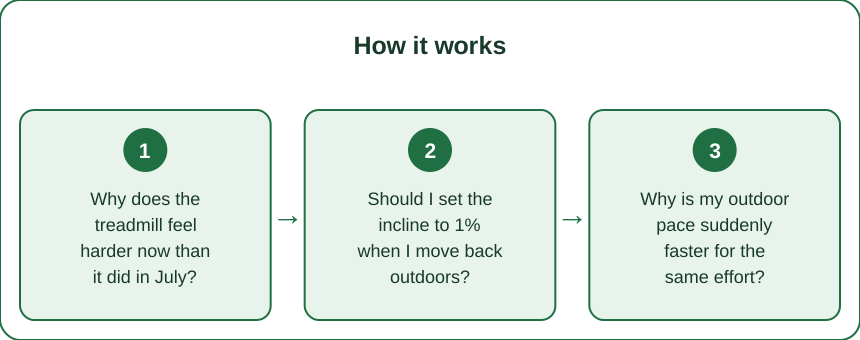
Why does the treadmill feel harder now than it did in July?
Because the room caught up with you. Through the worst of summer you probably ran indoors with the AC fighting hard, and your body got used to a cooled, still, controlled environment.
As outdoor temperatures drop, most people ease off the cooling - windows open, AC off, fan unplugged. The room drifts up to 72-76F with no airflow, which is thermally harder than an air-conditioned room even though it is cooler outside.
Running generates roughly 75-80% of its energy as heat. Without moving air, that heat has nowhere to go, and your heart rate climbs at the same pace it always ran.
Does a fan really matter that much?
Yes. A box fan aimed at your torso is the single highest-return treadmill upgrade there is - it commonly drops heart rate 5-10 bpm at an unchanged pace.
Should I set the incline to 1% when I move back outdoors?
Set it to 1% if your goal is to match flat outdoor running. The classic reason given - air resistance - only becomes meaningful at faster paces, but the 1% number holds up in practice as a reasonable adjustment for the belt assisting your leg turnover.
Below about 10:00 per mile, 0% is fine and 1% is harmless. Above 8:00 per mile pace, the 1% is doing real work.
What about the people running at 12% incline?
That is a different workout, not a road simulation. Steep walking incline is excellent training - it just does not translate to a flat outdoor pace at all.
Why is my outdoor pace suddenly faster for the same effort?
This is the fun one. Cooler air is genuinely faster. Research on marathon performance consistently finds that performance improves as temperatures drop from summer highs toward roughly 50-55F.
Most runners see a real, unearned improvement of 10-20 seconds per mile at the same heart rate when the dew point falls from oppressive to comfortable. You did not gain that fitness in a week - you were carrying a heat tax all summer and it just got refunded.
The trap is treating that new pace as your baseline and building the fall training block on top of it. Anchor the block to effort for two weeks first.
So was my summer training wasted?
The opposite. Training through heat produces real adaptations - plasma volume increases and thermoregulation improves - and those show up as a strong autumn.
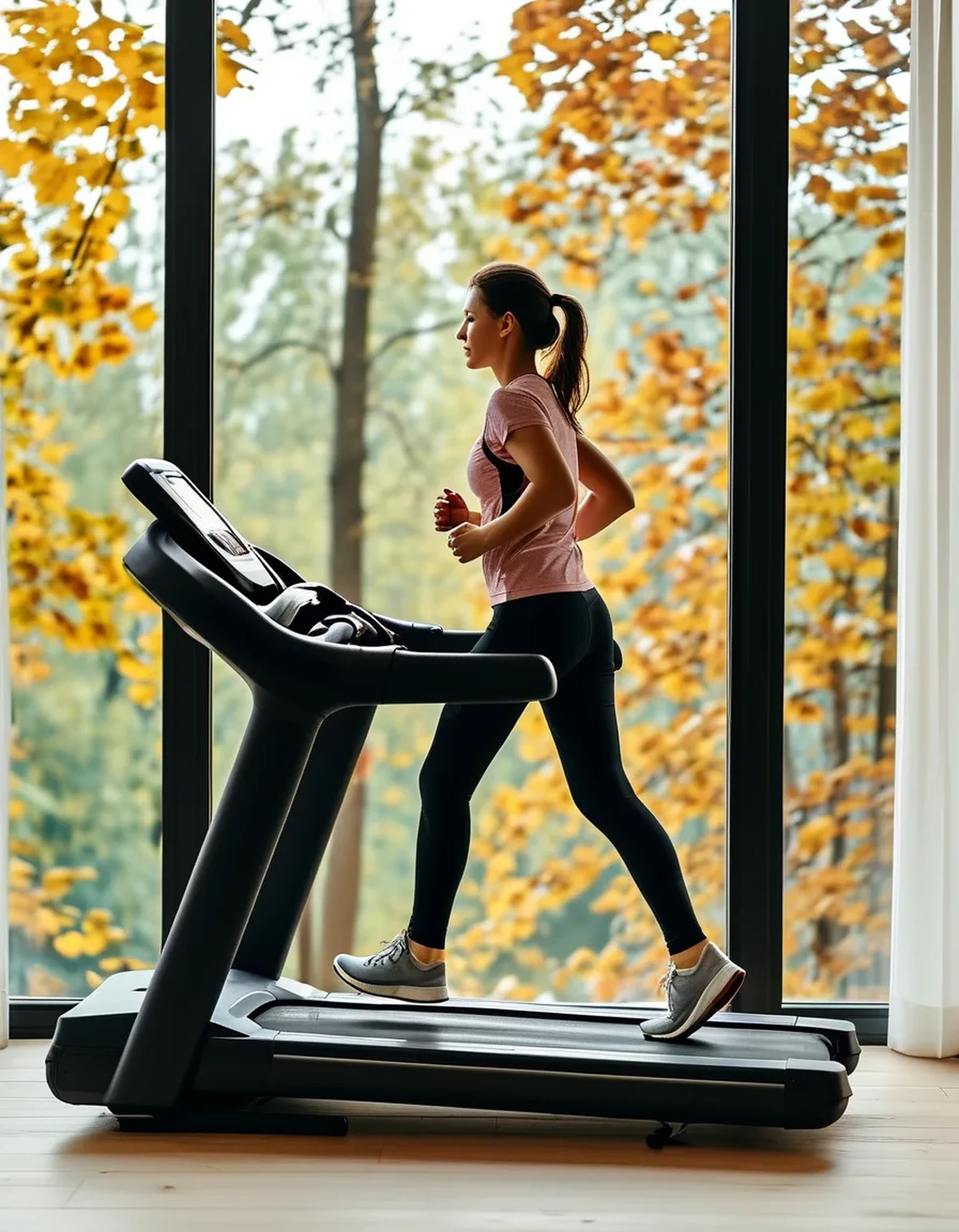
How do I compare treadmill and outdoor runs honestly?
Stop comparing pace and start comparing three things:
- Heart rate at a given effort. The most portable metric across surfaces and seasons.
- Talk test. If you can say a full sentence, it is easy on both machines and roads.
- Time, not distance. A 45-minute easy run is a 45-minute easy run indoors or out. Distance drifts with conditions; duration does not.
GPS distance and belt distance will never agree perfectly. Belt calibration drifts with wear, and GPS wanders under trees and buildings. Chasing agreement between them is a hobby, not training.
Does treadmill running actually change my stride?
Slightly, and mostly in ways that reverse quickly. Most runners show a marginally higher cadence and shorter stride on a belt, plus less variation - every step is on identical ground.
That sameness is the real difference. Outdoor running constantly perturbs your ankle and hip with camber, cracks, and grass. A month of exclusively belt running removes that stimulus, which is why the first few outdoor runs of the fall can leave your ankles and hips oddly sore.
How do I ease that transition?
Make the first two outdoor runs short and flat, and add one run per week on grass or dirt. The soreness usually resolves inside two weeks.
What is the smartest way to keep the treadmill in the rotation?
Keep it for the workouts where control is an advantage rather than a compromise:
- Precise intervals, where you want the pace held for you
- Incline work that your neighborhood does not offer
- Recovery runs, where a soft deck genuinely spares your legs
- Dark or icy mornings later in the season
A useful ratio through fall is one indoor run for every three outdoor runs. That is enough to keep the machine familiar so it is not a shock in December, and little enough that you get the real seasonal benefit outside.
Should I keep the treadmill running all winter or store it?
If you have the space, keep it set up. The winter runners who succeed are the ones who never had to make a decision about assembling anything at 6am.
FAQ: Indoor-to-Outdoor Transition Questions, Answered
How long before my paces stabilize?
Two to three weeks of consistent outdoor running. Until then, run by effort and let the watch record whatever it records.
Should I redo my heart rate zones for fall?
Not for the season change alone. Zones reflect physiology, not weather. If your paces at a given heart rate improve, that is the zones working correctly.
Is it bad to do all my long runs indoors?
Not bad, but limiting. The mental grind and the lack of terrain variety both matter for a race outdoors. If a long run has to be indoors, break it into blocks with a change of incline every 10 minutes.
TL;DR:
- Your treadmill got harder because the room got warmer relative to the AC you ran with all summer - use a fan.
- Cooler outdoor air is genuinely worth 10-20 seconds per mile at the same heart rate. That is a refund, not new fitness.
- Use 1% incline to approximate flat road; anything steeper is a separate workout.
- Compare heart rate, talk test, and duration - never pace across surfaces.
- Keep roughly one indoor run in four through fall so December is not a shock.
The indoor-outdoor swap is the one time each year your numbers genuinely lie to you in both directions. Run the effort you meant to run, give it three weeks, and the paces will sort themselves out.
Keep Reading
This article is for general informational and styling purposes only. Fit, sizing, and product availability may vary.