How Do You Know If Your Treadmill Motor Is Overheating Before It Fails?
Quick Answer: A faint burning or hot-electronics smell, the motor housing feeling noticeably warmer than usual after a normal-length workout, or the belt slowing under load that it previously handled fine are the three earliest signs of motor strain. Catching these early and reducing incline or session length temporarily prevents most motors from reaching full failure.
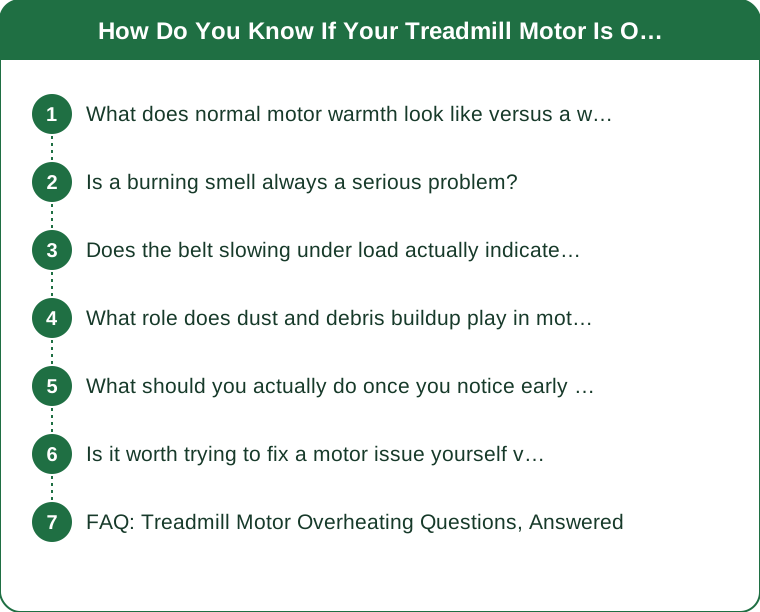
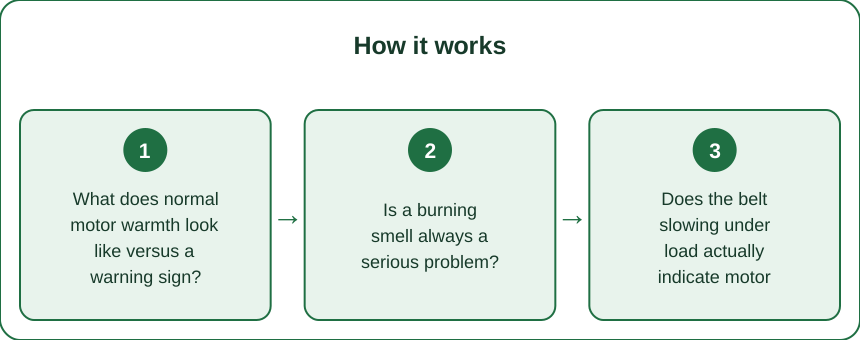
What does normal motor warmth look like versus a warning sign?
Some warmth after a 30-45 minute run is completely normal — motors generate heat as a byproduct of running, and a slightly warm housing on touch isn’t itself concerning. The warning sign is a noticeable jump from your treadmill’s usual warmth level, or heat that persists uncomfortably long after you’ve stopped, rather than warmth in isolation.
Establishing what ‘normal’ feels like for your specific machine during its first few months of use gives you a real baseline to compare against later, which is more useful than any general temperature rule.
Is a burning smell always a serious problem?
It’s always worth stopping and investigating, though not always catastrophic. A faint, brief electrical or dusty smell in the first few uses of a new treadmill is often just factory coating burning off and tends to fade after a handful of sessions. A recurring or strengthening burning smell on a treadmill that’s been used for months is a different situation — that pattern more reliably points to motor strain or belt friction and shouldn’t be run through repeatedly.
If the smell is accompanied by visible smoke, stop immediately and unplug the machine rather than continuing to troubleshoot while it’s running.
Does the belt slowing under load actually indicate motor trouble?
Yes, often specifically. A belt that noticeably slows or hesitates when you increase pace or incline, on settings the treadmill previously handled without issue, is one of the more reliable early signs that the motor is struggling to maintain output — this is different from belt slipping caused by lubrication issues, which tends to show up as a jerky or uneven feel rather than an actual speed drop.
If lowering incline or pace resolves the hesitation immediately, that’s consistent with motor strain rather than a belt or deck problem, which is useful for narrowing down what’s actually happening before calling a technician.
What role does dust and debris buildup play in motor overheating?
A significant one, and it’s the most preventable cause. Dust accumulation inside the motor housing restricts airflow around the motor, which is the primary way most treadmill motors cool themselves during use. Vacuuming the intake vents and, on models designed for it, opening the motor hood for a light interior cleaning every few months prevents a large share of overheating issues before they start.
Treadmills used in carpeted rooms or near pet hair accumulate this buildup notably faster than treadmills in bare-floor rooms, which is worth factoring into how often you clean.
What should you actually do once you notice early warning signs?
Reduce session length and incline temporarily while the issue is investigated, rather than continuing normal use and hoping it resolves on its own — motor strain tends to compound with continued heavy use rather than self-correct. Cleaning the motor housing and checking belt lubrication are the two things worth doing yourself before assuming it needs professional service.
If symptoms persist after cleaning and proper lubrication, that points more toward an actual motor component issue, which is worth a technician’s evaluation rather than continued troubleshooting at home — continuing to run a genuinely failing motor risks a more expensive full motor replacement instead of a smaller repair.
Is it worth trying to fix a motor issue yourself versus calling a professional?
For cleaning, lubrication checks, and basic troubleshooting, yes — those are within reach for most owners with the manufacturer’s manual. Actual motor component repair or replacement is a different category and generally worth a professional, both for safety (electrical components) and because incorrect reassembly can cause a bigger problem than the original issue.
FAQ: Treadmill Motor Overheating Questions, Answered
How often should I clean inside the motor housing?
Every 3-6 months for typical home use, more often in dusty rooms or homes with pets, is a reasonable general guideline.
Can overheating damage other parts of the treadmill besides the motor?
Prolonged motor strain can affect belt performance and, in some cases, electronic control board components, so addressing early signs protects more than just the motor itself.
Is it normal for a treadmill motor to run warmer in summer?
Somewhat, yes — ambient room temperature affects how efficiently the motor sheds heat, so a treadmill in a hot garage or unventilated room will run warmer than the same model in an air-conditioned room.
TL;DR:
- Some post-workout motor warmth is normal; a noticeable jump from your machine’s usual baseline is the actual warning sign
- A recurring or strengthening burning smell on an established treadmill points more reliably to motor strain than a one-time factory-coating smell on a new machine
- Belt hesitation under load that resolves when you lower incline or pace is a distinct sign from lubrication-related slipping
- Regular vent and motor housing cleaning prevents a large share of overheating issues before they start
- Reduce use and investigate at the first signs rather than continuing normal sessions and hoping it resolves
A treadmill motor rarely fails without warning — it just warns you in ways most people aren’t specifically listening for until something actually breaks.
Keep Reading
This article is for general informational and styling purposes only. Fit, sizing, and product availability may vary.