Why Your Treadmill Desk Sounds Louder to Neighbors Than It Does to You
Quick Answer: Belt motor hum is mostly airborne noise you notice; the thumping downstairs neighbors complain about is structure-borne impact noise traveling through the floor and walls — a problem a quieter motor doesn’t fully solve. A dense mat, isolation pads, and speed limits during shared-wall hours address the actual transmission path.
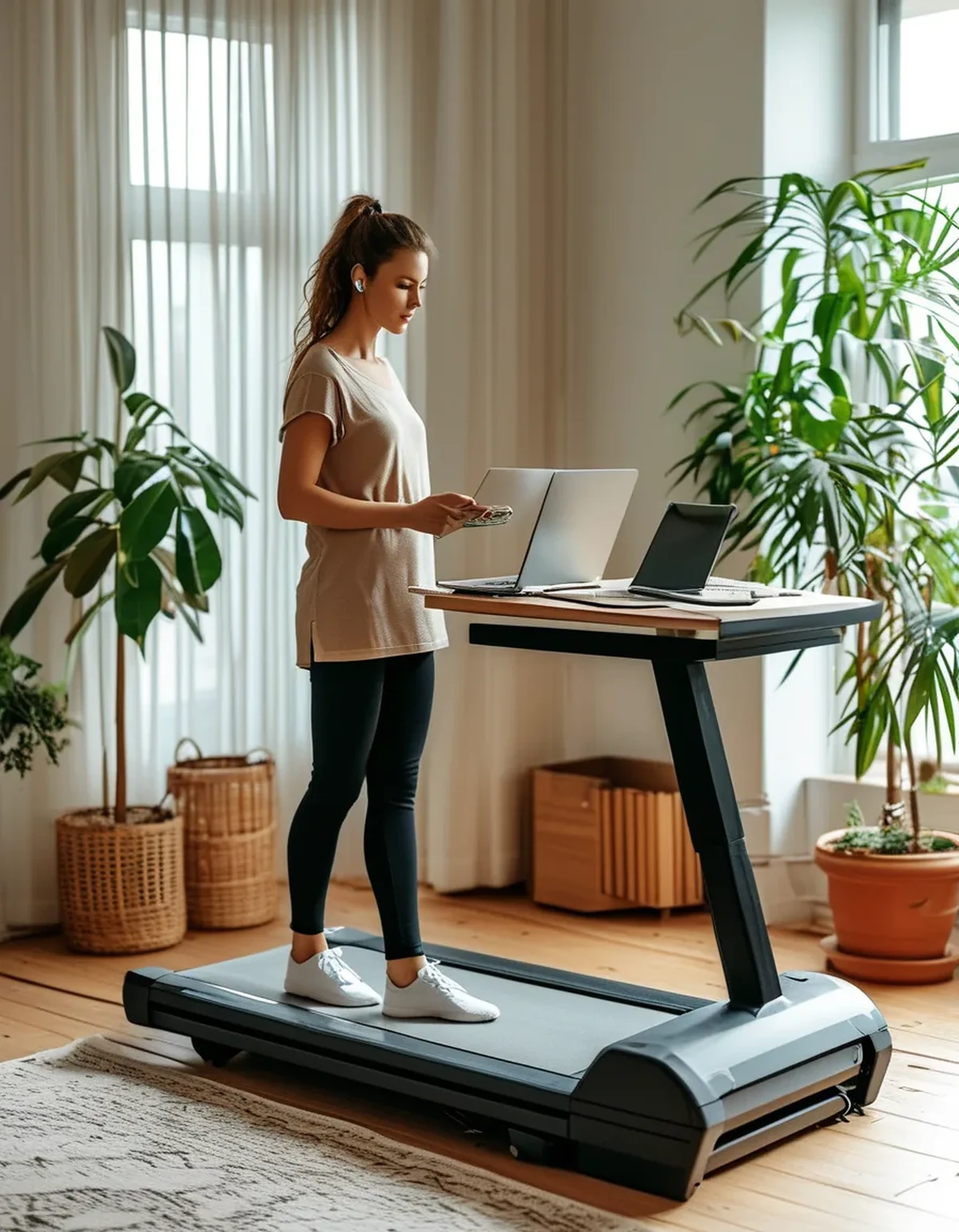
You’ve got headphones in, working through your morning meeting while walking, and it genuinely sounds fine from where you’re standing. Then a neighbor mentions the thumping through their ceiling, and it’s confusing — because that’s not remotely what you’re hearing.
Why does the noise sound so different to you versus your neighbor?
The motor hum and belt friction you hear is airborne sound — it travels through air and drops off quickly with distance and any barrier. What your downstairs neighbor hears is largely structure-borne impact noise — the repeated footfall force traveling directly through the floor joists and walls, which barely resembles the sound in your own room at all.
This is why a quieter treadmill motor genuinely doesn’t fix a downstairs noise complaint — you’re solving the wrong type of noise.
What actually reduces structure-borne impact noise?
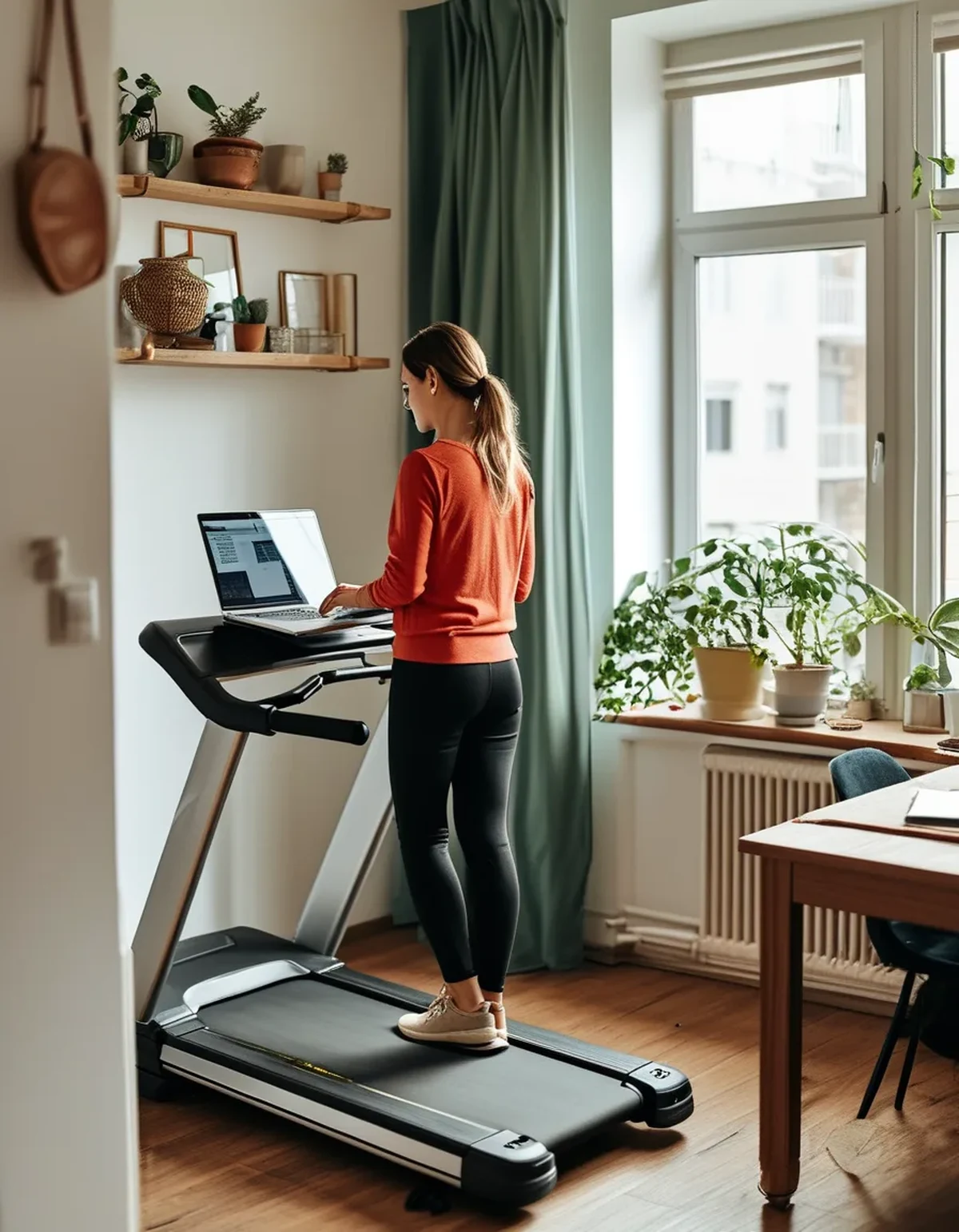
A dense rubber mat under the entire treadmill footprint, not just a thin yoga mat, absorbs a meaningful amount of impact before it reaches the floor. Isolation pads (small rubber or cork pucks under each foot of the machine) go further by decoupling the machine’s frame from direct floor contact.
The Desk Height Mismatch Guide
Beyond noise, a treadmill desk set at the wrong height changes your gait in ways that increase footfall force — walking with a hunched or overreached posture toward a too-low or too-high desk tends to produce a heavier, less efficient stride, which compounds the noise problem on top of the ergonomic one. Getting desk height genuinely right (elbows at roughly 90 degrees) often quiets footfall as a side effect.
Does walking speed change how much noise transmits downstairs?
Yes, meaningfully. Above roughly 2.5-3 mph, footfall force increases substantially compared to a slow, deliberate pace. During hours when noise is more likely to bother neighbors — early morning, late evening — keeping pace on the slower end reduces impact transmission more than any equipment change alone.
What’s the realistic full setup for a shared-wall apartment?
Dense mat across the full footprint, isolation pads under the frame, a corrected desk height, and a slower pace during sensitive hours. No single fix eliminates structure-borne noise completely in an older building, but this combination usually brings complaints down to a manageable level rather than zero.
If noise remains an issue despite all of this, a direct, friendly conversation with the neighbor about workout timing often resolves more than another equipment purchase would.
Is upgrading to a ‘quiet’ treadmill motor worth it for this problem?
Only partially. A quieter motor helps with the airborne hum you notice, but does little for the impact noise that’s actually the complaint. If budget is limited, mats and isolation pads are the higher-leverage purchase for a downstairs-noise problem specifically.
FAQ: Treadmill Desk Apartment Noise Questions, Answered
Do isolation pads actually make a noticeable difference?
Many apartment dwellers report a real, noticeable reduction in complaints after adding proper rubber isolation pads, though results vary by building construction and floor type.
Is there a best time of day to avoid noise complaints?
Mid-morning to early evening is generally the safest window in most buildings; very early morning and late night are when structure-borne noise is most noticeable to neighbors.
Does carpet under the mat help further?
A rug or carpet layer under the dense mat adds a bit more dampening, though it’s a smaller effect than the mat and isolation pads themselves.
TL;DR:
- Motor hum you hear is airborne noise; neighbor complaints are usually structure-borne impact noise — different problems
- A dense full-footprint mat plus isolation pads under the frame address the actual transmission path
- Speeds above 2.5-3 mph increase footfall force noticeably
- Fixing desk height reduces heavy, inefficient footfall as a side benefit
A quieter motor won’t fix a downstairs complaint on its own — the floor-contact setup is where the real fix lives.
Keep Reading
This article is for general informational and styling purposes only. Fit, sizing, and product availability may vary.