Does Adjustable Treadmill Deck Cushioning Actually Matter, or Is It Marketing?
Quick Answer: Yes, adjustable deck cushioning is real and functional, not just marketing — it changes how much the deck flexes under impact, with softer settings absorbing more shock (better for joints, slightly less energy-efficient for speed work) and firmer settings feeling more like road running (better ground feedback, more impact transmitted upward), so the right setting depends on your workout goal, not a single universal ‘best’ answer.
You’ve seen the cushioning dial or app setting and wondered if it’s a real mechanical difference or just a number that doesn’t do much. It’s a real difference — the question is which setting actually fits what you’re doing.
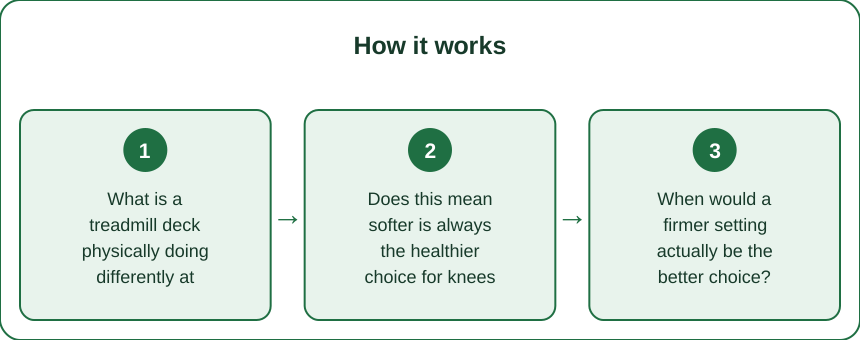
What is a treadmill deck physically doing differently at each setting?
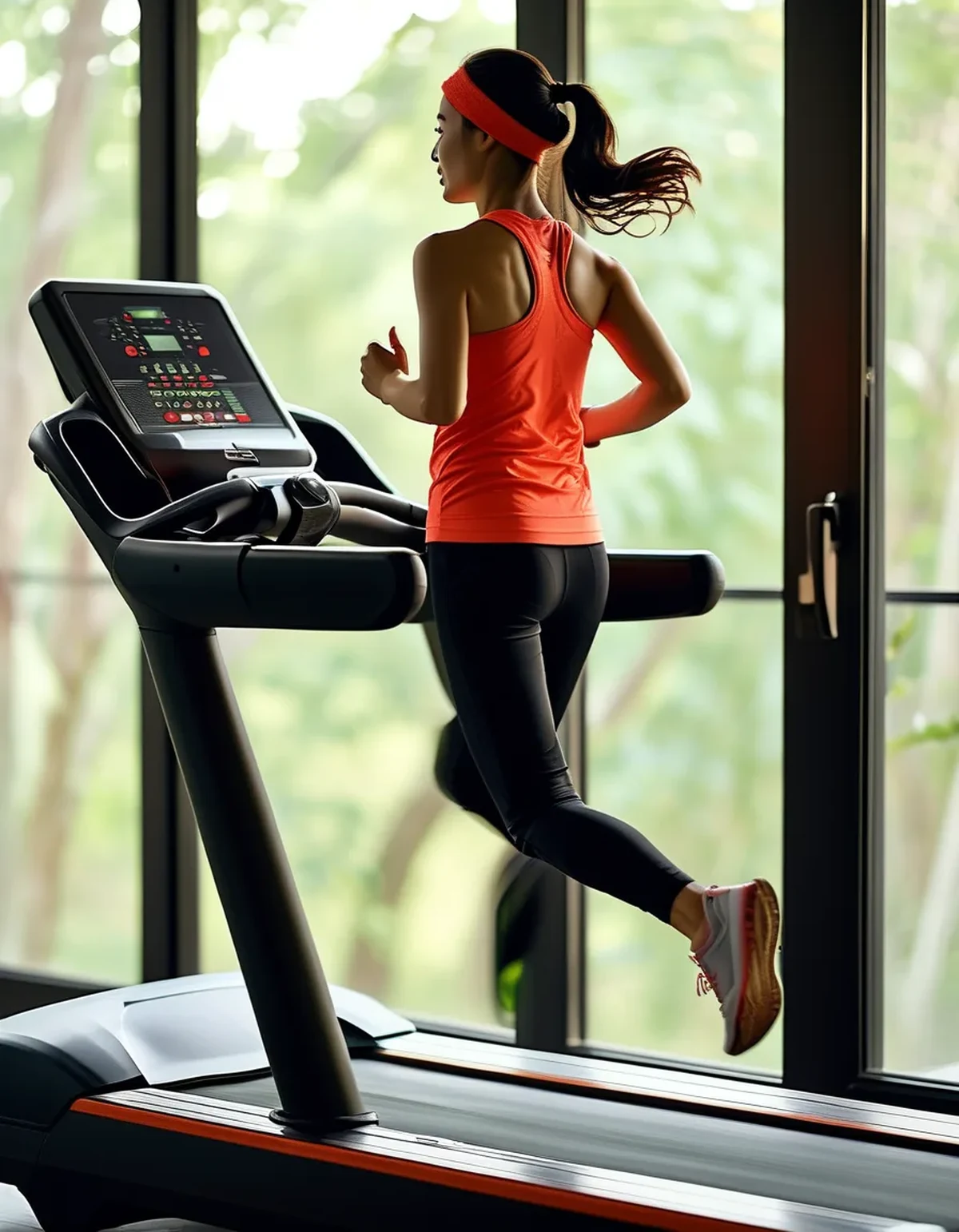
Adjustable cushioning changes the tension or spacing of shock-absorbing elements (often elastomer cushions or springs) mounted between the running belt’s deck and the frame. A softer setting allows more deck flex on impact, which absorbs more force before it reaches your joints. A firmer setting reduces that flex, transmitting more force directly, similar to running on a harder outdoor surface.
Does this mean softer is always the healthier choice for knees and joints?
Softer settings generally do reduce impact force at your knees and hips, which matters most for beginners, anyone returning from injury, or longer steady-state sessions. But excessively soft cushioning can also slightly reduce running economy — your foot sinks a bit more before push-off, meaning marginally more energy spent per stride, which matters more at higher speeds or for interval work.
When would a firmer setting actually be the better choice?
For speed work, sprint intervals, or runners training specifically to prepare for road races, a firmer deck setting gives ground feedback closer to what you’ll actually run on outdoors, which some coaches consider useful for stride mechanics carryover. It’s a trade-off between joint protection and training specificity, not a simple better-or-worse.

Is a fixed-cushioning treadmill worse if it doesn’t have this feature at all?
Not necessarily — most fixed-cushioning treadmills are tuned to a moderate middle ground that works reasonably well for most users and most workout types. The adjustable feature is a genuine benefit mainly if you regularly alternate between very different training goals (recovery walks versus speed intervals) on the same machine.
Myth vs Fact: Treadmill Cushioning Settings
Myth: Cushioning settings are just a marketing number with no real mechanical change. Fact: they adjust actual deck flex tension and measurably change impact force at the joint.
Myth: Softer is always better for your body. Fact: softer reduces impact but can slightly reduce running economy at higher speeds, so the ideal setting depends on the workout.
Myth: You should pick one setting and never change it. Fact: many runners benefit from switching cushioning firmness between easy sessions and speed sessions on the same machine.
FAQ: Treadmill Cushioning Settings, Answered
How do I know which setting my treadmill is currently on?
Check the console menu or a physical dial near the base of the deck — most machines display a numeric or low/medium/high setting rather than requiring guesswork.
Does cushioning setting affect the treadmill’s motor or belt speed?
No, cushioning is a separate mechanical system from the motor and belt drive, so adjusting it doesn’t affect speed or incline performance.
Should beginners always start on the softest setting?
Generally a reasonable default, especially for anyone new to running or coming back from time off, though it’s worth testing a slightly firmer setting once you’re consistently running comfortably.
TL;DR:
- Adjustable cushioning is a real mechanical change in deck flex, not just a marketing label
- Softer settings reduce joint impact but can slightly cost running economy at speed
- Firmer settings suit speed work and road-race-specific training feedback
- Most runners benefit from switching settings based on the specific workout, not picking one forever
The dial isn’t decoration — matching it to what you’re actually training for is worth the ten seconds it takes to adjust.
Keep Reading
This article is for general informational and styling purposes only. Fit, sizing, and product availability may vary.