Why Your Treadmill Belt Keeps Slipping Mid-Run — and It's Usually Not the Motor
Quick Answer: Belt slipping is most commonly caused by insufficient belt tension or a lack of lubrication between the belt and deck, not motor failure — both are simple, low-cost home fixes that resolve the vast majority of slipping cases before a motor or more expensive repair should even be considered.
A jerking or slipping belt feels alarming mid-run, but it’s rarely the expensive problem it seems like in the moment.

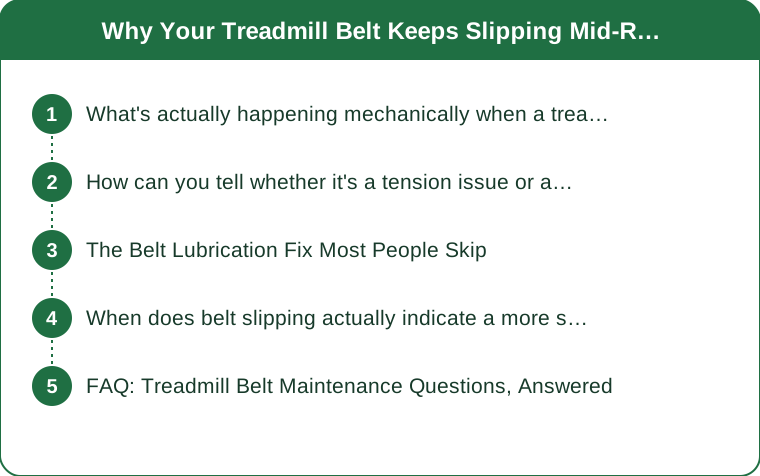
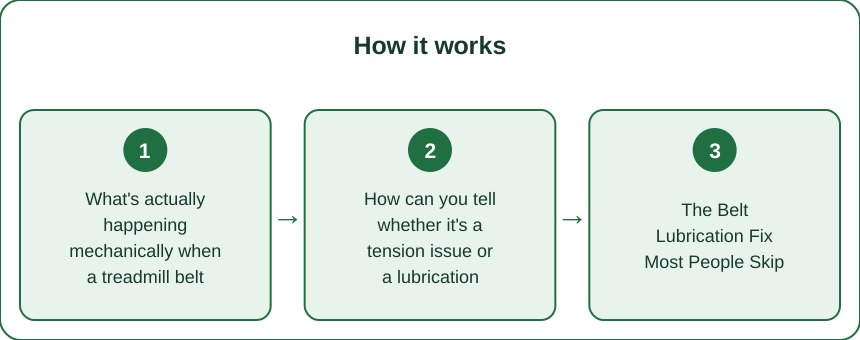
What’s actually happening mechanically when a treadmill belt slips?
Treadmill belts run over a deck and are held taut by tension bolts at the rear roller — over time and use, this tension can loosen slightly, allowing the belt to slip against the roller under load (like the push-off force of running) instead of moving smoothly with it.
Separately, the belt is meant to glide over the deck with a thin layer of lubricant between them; when that lubrication wears thin, friction increases and can cause the belt to hesitate or jerk rather than move smoothly, which can feel similar to a tension problem but has a different fix.
How can you tell whether it’s a tension issue or a lubrication issue?
A simple diagnostic: lift the edge of the belt near the middle of the deck while the treadmill is off — if you can lift it more than about 2-3 inches, tension is likely too loose. If tension seems adequate but the belt still feels sticky, jerky, or makes a rubbing sound, lubrication is the more likely cause.
Both issues can also compound each other, so checking and addressing both is reasonable if the cause isn’t immediately obvious from the lift test alone.

The Belt Lubrication Fix Most People Skip
Most treadmill manufacturers recommend lubricating the belt/deck interface every 3-6 months depending on usage frequency, using silicone-based treadmill lubricant specifically (not general household oils, which can degrade the belt material or void warranties).
This is a genuinely under-maintained step — many owners never do it at all, which is why lubrication-related slipping is one of the most common treadmill issues reported despite being one of the cheapest and fastest to fix at home.
When does belt slipping actually indicate a more serious problem?
If tension and lubrication are both confirmed adequate and slipping persists, especially accompanied by unusual motor noise, burning smell, or speed inconsistency unrelated to belt grip, that combination is a stronger signal of an actual motor or drive belt issue requiring professional service rather than a simple home fix.
But this is genuinely the less common scenario — most slipping resolves with tension adjustment and lubrication alone.
FAQ: Treadmill Belt Maintenance Questions, Answered
How often should treadmill belt tension be checked?
Checking every few months, or immediately if slipping starts, is reasonable for regular home use.
Can over-tightening the belt cause problems too?
Yes — excessive tension increases strain on the motor and rollers, so tightening should be done incrementally (small adjustments, testing between each) rather than all at once.
Is treadmill belt lubrication something most people can do themselves?
Yes, for most home treadmill models it’s a straightforward process involving lifting the belt edge and applying lubricant along the deck, typically covered in the owner’s manual.
TL;DR:
- Belt slipping is most commonly caused by loose tension or worn lubrication, not motor failure
- A simple lift test (more than 2-3 inches of lift) points to a tension issue
- Silicone-based treadmill lubricant applied every 3-6 months prevents most friction-related slipping
- Persistent slipping alongside motor noise or burning smell is the real signal for professional service
Before assuming the worst, check tension and lubrication first — together they resolve the large majority of treadmill belt slipping without a repair call.
Keep Reading
This article is for general informational and styling purposes only. Fit, sizing, and product availability may vary.