Does Treadmill Mileage Count the Same as Outdoor Mileage? Questions Answered
Quick Answer: Log it as a mile — it is a mile of training time and effort. But the stimulus differs: no air resistance, a belt that assists limb turnover, a perfectly flat and consistent surface, and no wind or terrain variation. For easy running the difference is small. For race-specific work it matters, and a 1 to 2 percent incline closes most of the gap on the energetic side without changing your mechanics much.
Every runner who moves indoors for the season asks this, usually while looking at a training log that suddenly has an asterisk in their head.
Here is what actually differs, and by how much.
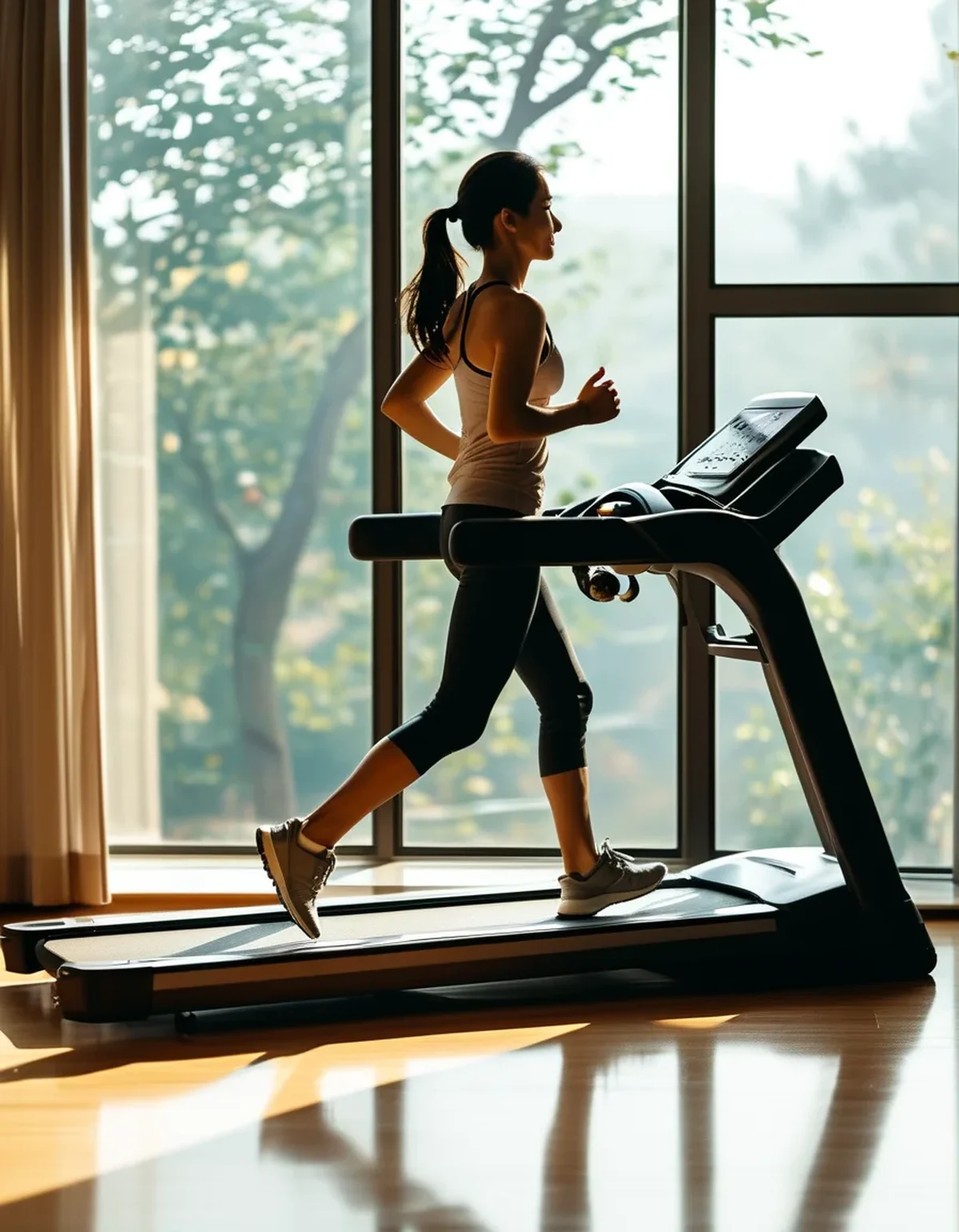
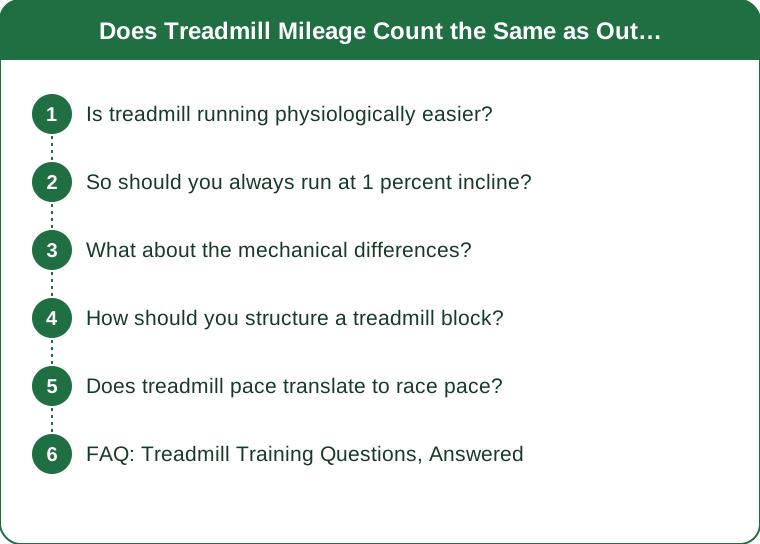
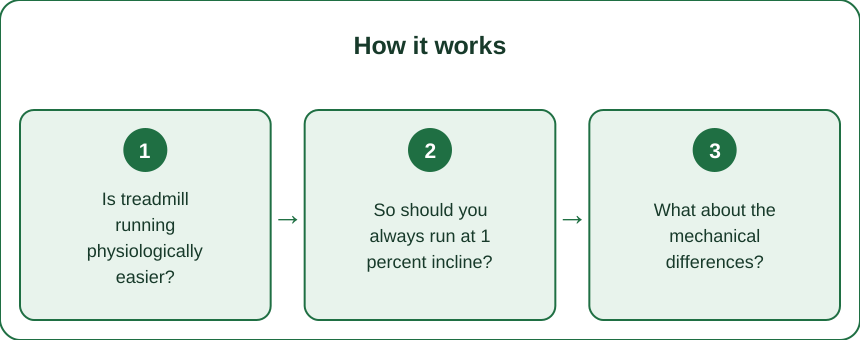
Is treadmill running physiologically easier?
At the same pace on a flat belt, slightly yes — and the reason is mostly air resistance.
When you run outdoors you push through still air, and that costs energy. The cost rises with speed. At easy paces it is a small fraction of total energy expenditure; at 6-minute-mile pace it becomes meaningful. Indoors, that cost is zero.
The classic finding is that a 1 percent treadmill gradient approximates the energetic cost of outdoor running at moderate to fast paces. That study is where the widely repeated 1 percent rule comes from, and it is worth knowing that it was strongest at faster speeds — at easy jogging paces, a flat belt is close enough that the correction barely matters.
There is a second, smaller factor: the moving belt does some of the work of bringing your foot back under you. The effect on energy cost is modest, but it does change how the stride feels.
So should you always run at 1 percent incline?
Not always. Set it by purpose:
- Easy and recovery runs: 0 to 1 percent. The energetic correction is negligible at those speeds, and flat is easier on everything.
- Steady and tempo runs: 1 percent. This is where the correction is worth applying, because you care about the effort matching an outdoor equivalent.
- Faster intervals: 1 to 2 percent. Air resistance matters most here, and a slightly higher gradient is a reasonable proxy.
- Hill work: whatever the session calls for, obviously, and treadmills are excellent for this because the grade is exact and repeatable.
One caution: treadmill incline calibration is often inaccurate, particularly on older or heavily used machines. Do not treat the displayed number as precise. Consistency between sessions on the same machine matters far more than the absolute figure.
And running everything at 3 or 4 percent to make it harder is a common and unhelpful habit — it changes your mechanics substantially and it is no longer the same session.
What about the mechanical differences?
These are the ones people underrate.
No surface variation. Outdoor running involves constant micro-adjustments — camber, gravel, a root, a kerb. Those adjustments load the stabilising muscles around the ankle and hip. A treadmill removes all of it, which is restful and, over months of exclusive treadmill running, means less stabiliser work.
No braking or turning. Corners, downhills, and pace changes around obstacles all recruit differently. A belt at a constant speed is the most uniform running you will ever do.
Identical stride, repeated. The uniformity is a benefit for controlled sessions and a drawback for tissue robustness. Repetitive identical loading is a plausible contributor to the niggles some runners get when they switch entirely indoors for a winter.
Reduced eccentric loading. No downhills means much less of the eccentric work that prepares your quads for a hilly race, and it is the single biggest gap when preparing for a course with descent.
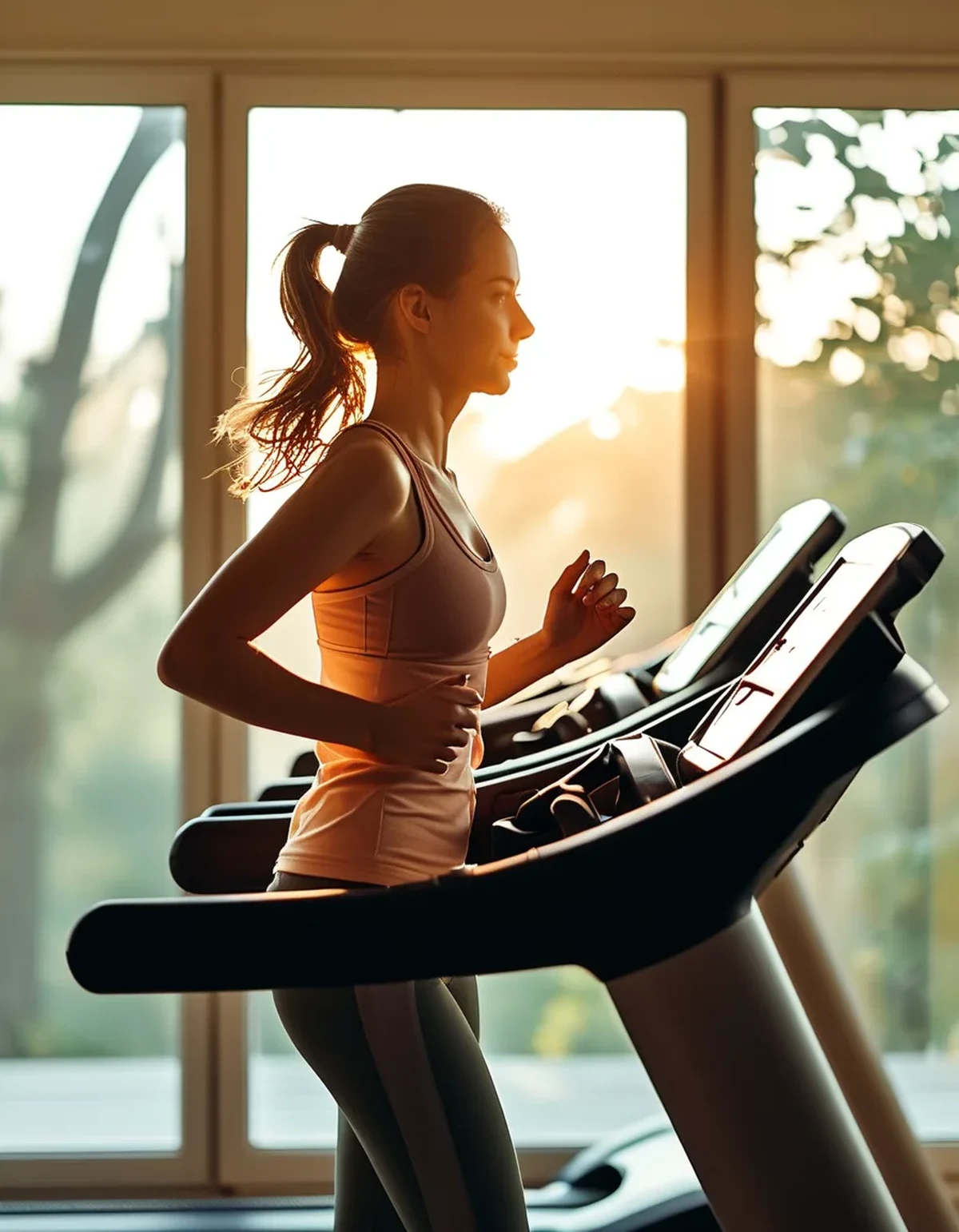
How should you structure a treadmill block?
Treat it as a tool with a specific profile rather than a substitute.
What the treadmill does better than outdoors:
- Precise, repeatable pace control for intervals
- Exact incline for hill repeats without a hill
- Safety in dark, icy, or genuinely bad conditions
- Progressive runs where you change pace by pressing a button
What it does worse:
- Terrain variability and stabiliser work
- Eccentric loading from descents
- Pacing skill, since the machine paces you
- Mental practice at holding effort without external help
A sensible mixed block: keep at least one outdoor run a week if conditions allow, and make it the long one — that is where surface variation and pacing skill matter most. Use the treadmill for structured intervals and for any day when outdoor conditions would compromise the session anyway.
If you are entirely indoors for a season, add two short strength sessions covering single-leg work and calf loading. That covers most of what the belt is not giving you.
Does treadmill pace translate to race pace?
Imperfectly, and the discrepancy is usually in the direction runners do not want.
Common causes of a mismatch:
- Calibration drift. Belt speed on a well-used machine can be off by several percent, and it is nearly always reading fast rather than slow.
- Perceived effort differs. Many runners find the treadmill feels harder at the same pace due to heat, no airflow, and no visual motion — while being energetically slightly easier. Both things are true at once.
- Heat is the biggest single factor. Without moving air, body temperature rises faster, heart rate drifts up, and the run feels much harder in the second half. A fan changes this substantially and is the highest-value treadmill accessory by a wide margin.
The practical answer: use effort and heart rate as your primary anchors indoors, and treat displayed pace as a secondary reference on the machine you always use. When you return outdoors, expect a week or two of recalibration before your pacing instinct is reliable again.
FAQ: Treadmill Training Questions, Answered
Should I log treadmill miles separately?
A note in the entry is useful — the machine and incline — so that when you compare sessions months later you are comparing like with like. A separate total is not necessary. The training happened.
Is it worse for my joints or better?
The deck is more forgiving than concrete, which reduces peak impact. But the uniformity means the same tissues take the same load every stride. Neither is clearly better; they present different risks, and variety beats either alone.
Why does my heart rate climb during a steady treadmill run?
Mostly heat. Cardiac drift is far more pronounced indoors without airflow. A fan pointed at your torso can hold heart rate meaningfully lower at the same pace, and it is the cheapest performance improvement available in a home gym.
Does holding the handrail change the mileage?
It changes the work substantially — holding on offloads a meaningful part of the effort, particularly on an incline. The distance display does not know. If you need the rail for balance, lower the speed or incline until you do not.
TL;DR:
- Log it as a mile; the difference is in stimulus, not in whether the training counted.
- A 1 percent incline approximates outdoor energy cost at moderate to fast paces; at easy paces flat is fine.
- The bigger gaps are mechanical — no terrain variation, no eccentric downhill loading, no pacing practice.
- Heat drives most of the this feels harder sensation, and a fan is the best fix available.
Use the belt for what it is good at — precise intervals and exact hills — and keep one outdoor run a week for everything it cannot give you.
Keep Reading
This article is for general informational and styling purposes only. Fit, sizing, and product availability may vary.